A First Festival Visit: Leave Space Between Events
A first festival visit is easier to enjoy when travel, queues and quiet pauses have room alongside events, with a flexible plan that suits your day.
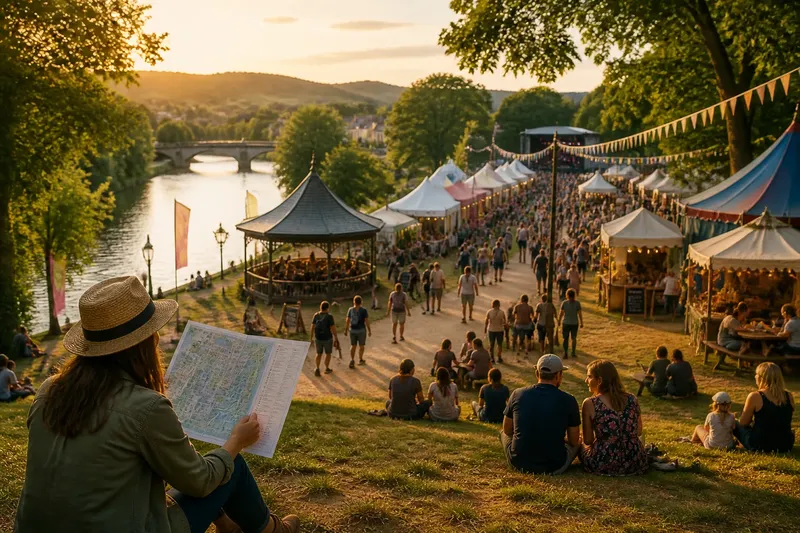
A first festival visit works better when the day has room between events. A printed programme may make every performance, demonstration and talk look like an opportunity you should seize. Resist the urge to turn that page into a timetable. Leave open stretches for finding your bearings, noticing the site and resting before the next thing begins.
This is not a case for ignoring the programme. It is a way to use it without letting it dictate every hour. The right plan depends on how you are travelling, who is with you and what you most want from the gathering. Start with those circumstances, then choose a few points to anchor the day.
Choose a loose plan if you are still learning the site
On a first visit, even a compact festival can feel larger than its map suggests. A stage name may be easy to spot on paper but less obvious among paths, stalls, signs and crowds. Allow for the simple work of arriving: collecting a wristband, checking the entrance, locating toilets and working out which routes feel comfortable.
Pick one event you would be disappointed to miss, and perhaps one more that matters to you. Treat the rest as possibilities rather than appointments. If the event you want is in a separate part of the grounds, leave a generous gap before it so you can walk there without hurrying or abandoning something you have just discovered.
When you arrive, pause near the site map rather than setting off at once. Find a useful landmark, such as the main stage, a distinctive tent or the entrance you came through. A map saved on your phone can help, but note where the organisers place physical information boards too; a screen is less useful when its battery is low or reception is patchy.
Keep the day open if you are coming for atmosphere
Some visitors want to drift through craft stalls, listen to music from the edge of a crowd or watch a communal activity without joining it. If that is your reason for coming, a densely scheduled plan works against you. Choose a broad area or part of the day to explore, and let an event catch your attention rather than chasing a list.
This approach suits festivals where the setting itself is part of the experience: a village green, a waterside promenade, a park or a collection of streets. You might notice how people gather around a small performance, where families settle with food, or which path offers a quieter route between busy areas. These observations are part of the visit, not time wasted before the “real” programme.
Say you arrive at a riverside festival with one music set marked on your programme. You hear a caller inviting people to join a short dance near the bandstand, then notice a shaded bench on the way there. You could watch the dance, sit for a while and still make the set; the expected result is a day shaped by what you encountered, with the performance preserved as a welcome anchor rather than a deadline for everything else.
Allow more margin when travel or access is complicated
If you are travelling by bus, train or a lift from someone else, build the day around the parts you cannot easily change. Check the return options before you go, and identify the latest departure that still suits you. Keep the final stretch of the festival flexible so that a delayed performance or a slow walk back does not turn the journey home into a scramble.
Visitors with mobility needs, sensory sensitivities, young children or a companion who tires easily may need more pauses and shorter routes. Look for access information before arrival, including step-free paths, seating, quiet spaces and accessible toilets. If a detail is unclear, contact the organisers. A plan with fewer fixed commitments can make room to respond to changing comfort without requiring anyone to explain or apologise.
For a group, agree on a simple meeting point in case people separate. Choose a recognisable place that is easy to describe, rather than relying on a vague message such as “near the food”. If phone reception is uncertain, decide when you will meet again and who will stay with anyone who prefers not to move through the crowd alone.
Use the programme as a menu, not a contract
Before the visit, scan the programme for what is genuinely distinctive to you: a performer you already enjoy, a craft you want to see, a procession or a talk connected to a local tradition. Mark those items first. Then look for gaps around them, rather than filling every blank with another event.
Some programmes list start times but not how long a queue may take or how long it takes to cross the site. Others include overlapping performances, so choosing one means letting another go. That is normal. If two events matter equally, decide which one is easier to catch another time, or which setting you would rather experience. You can also wait until you reach the site and judge the crowd, weather and mood.
A paper programme has a practical advantage: you can fold it open to the day’s listings without switching apps. A phone calendar is useful if you want an alert for one fixed event. Either way, avoid filling the schedule with reminders for things you can simply discover on the ground.
Decide how much structure fits your kind of visit
Use the situation that most resembles yours to choose a starting plan. The aim is not to follow a formula; it is to avoid making a day more demanding than it needs to be.
- You have one event you especially want to see. Keep that as the main anchor, and leave open time on both sides for the walk, the queue and a pause afterwards. This fits a visitor who wants a clear reason to attend but does not want the whole day ruled by a timetable.
- You are visiting with children or someone who needs regular rests. Choose a short outing window and one likely event, then identify a place to sit and a route back to the entrance. This fits when energy and comfort may change; extra scheduled activities can become obligations rather than pleasures.
- You are arriving late or leaving early. Pick one area close to your entrance or exit and one event that fits the time you have. This avoids spending a brief visit crossing the site repeatedly, and leaves a little room for an unexpected delay.
- You are attending with friends who want different things. Agree on a shared meeting point and one time to reconnect, then let people choose separate activities if they prefer. This suits a group that wants company without requiring every person to follow the same route.
- You have no particular event in mind. Skip fixed bookings and begin with a slow circuit of the site, stopping when something appeals. This is a good fit if your main interest is the gathering’s atmosphere and you would rather discover than pursue a list.
What should you check before leaving home?
How do I choose which events to mark?
Mark the event you care about most, then add another only if it leaves a comfortable interval around the first. Give priority to something with a fixed start or limited access; keep open activities as flexible options.
How much time should I leave between events?
There is no universal interval, because site size, queues and walking routes differ. Use the map and organiser information to judge the journey, then add room for a drink, a seat or a wrong turn.
What if I miss an event I planned to see?
Check whether it is repeated or available elsewhere in the programme, but do not treat a missed slot as a reason to rush through the rest of the day. Choose the next thing that still appeals, including a pause if that is what you need.
Should I make a plan if I am going alone?
A simple anchor can be reassuring: note one event, the entrance and a place to sit. Keep the rest open, and use the organisers’ information point if you need help finding a route or checking a change to the programme.
Make pauses part of the plan
A pause does not need to be a formal rest stop. It might mean standing at the edge of a performance, finding a bench, buying a drink or stepping away from a crowded path. Notice how you are feeling before committing to the next event. If you are tired, hungry or struggling to hear a companion, a quiet interval may improve the rest of the visit more than another activity would.
Food can provide a natural break, but popular stalls may have queues. If you have dietary needs, check the festival’s food information in advance and bring only what the event permits. A reusable bottle can be useful where refill points are available; check the venue’s entry rules before packing it.
For a first festival visit, leave space between events because that space is where the day becomes your own. Let the programme show what is possible, then choose a pace that suits your journey, company and energy. Keep one or two anchors, a clear way to meet or leave, and enough room to stop when something catches your eye. A flexible plan does not promise a perfect day; it gives you the freedom to enjoy the one that actually unfolds.