The Myth That Every Festival Custom Is Ancient
Festival customs need not be ancient to matter. Learn how to describe a practice’s origins accurately and distinguish inherited, borrowed and recent traditions.
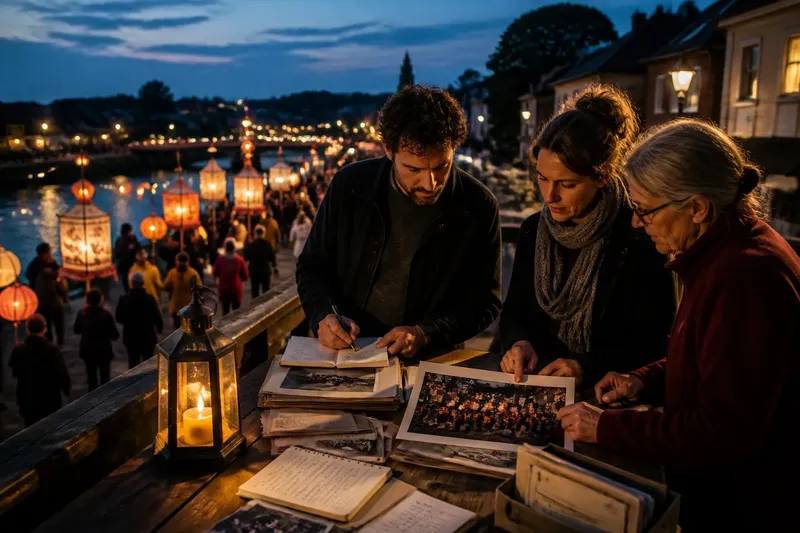
A festival programme calls its lantern procession “ancient”, but offers no account of when it began. That gap matters: a custom can feel familiar because people have repeated it, because it has a long history, or through both. Festival custom origins deserve careful description, not an age invented to make a practice seem more worthy.
Festival custom origins need more than a familiar feeling
Participants may recognise a custom without knowing its beginnings. Familiarity is not evidence of great age, but neither does repetition alone explain why a practice feels established. A long history, personal memories, the setting and the way a custom is taught can all contribute.
A recent practice can matter deeply to the people who take part. The more useful question is not whether it is old enough to deserve attention, but what is known about its beginnings and what claims the available evidence can support.
Separate inherited practice from adopted and revived forms
Festival customs can have different histories. A practice may have been carried forward within a community, adopted from another place, introduced by organisers or revived after a period of absence. Those descriptions are not interchangeable.
Borrowing calls for particular care. Organisers should learn where a practice comes from, consider whose knowledge is relevant and avoid presenting another community’s custom as a local invention. If the source or permission to share is unclear, they can seek guidance from people connected to that practice before putting it in a programme.
Revival also deserves precise wording. A custom that has returned after a break has a history, but its present form may differ from earlier accounts. A programme can acknowledge both the connection and the changes without implying uninterrupted practice.
Trace a custom before describing its history
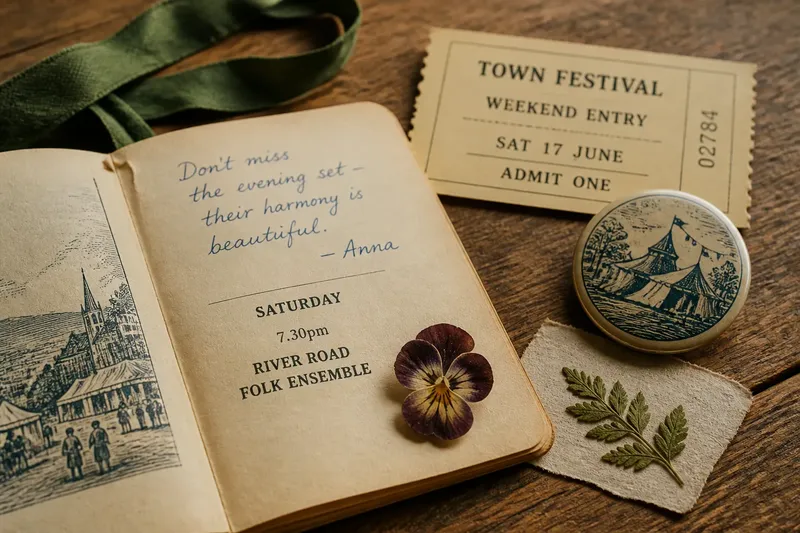
A useful account starts with evidence people can check: old programmes, dated photographs, meeting notes, local archives and conversations with participants. No single source will always tell the whole story. Memories can differ, and a missing record does not prove that a practice is new.
- Check the earliest dated programme you can locate; if it names the custom, describe that as a documented appearance, but do not claim it began then without further evidence.
- Check dated photographs for the custom’s visible details; if the images show a change in materials or setting, describe the change, but do not infer an exact start date from appearance alone.
- Ask organisers who proposed the practice and consult any meeting notes; if accounts agree, identify the source with appropriate care, but if they conflict, state that the beginnings are disputed.
- Speak with participants who remember earlier versions; if their recollections overlap, explain what they recall, but distinguish memory from a dated record.
- Look for evidence of a break or revival; if a gap is documented, call the practice revived or resumed, but if the record is incomplete, say that continuity is uncertain.
- Check whether a custom came from another community; if its source is clear, name it and explain the local adaptation, but if the source is uncertain, avoid claiming either local invention or a definite origin.
Imagine a festival team has a lantern procession in this year’s programme, a photograph showing lanterns at the event several years earlier, and conflicting recollections about whether an older procession followed the same route. The team checks its archive and asks two long-time volunteers; neither can locate a record of the current route before that photograph. It can describe the procession as documented in the photograph and say that earlier accounts are uncertain. It should not label the current route ancient or claim the photograph marks the procession’s beginning.
Use precise labels in programmes and displays
Words such as “traditional”, “old” and “ancient” can hide differences in what is known. More specific wording gives visitors a clearer account: “introduced by the festival committee”, “adapted from a neighbouring community’s practice” or “revived after a break”, when the evidence supports those descriptions.
A brief note can name who shared the information and what remains uncertain. If a custom has more than one account of its beginnings, say so rather than choosing the most flattering version. This makes the festival’s story more credible and leaves room for participants to add or correct details.
What should a festival say about a custom’s age?
How can organisers tell when a custom began?
Compare dated programmes, photographs, minutes and participant recollections, then distinguish a documented appearance from the actual beginning. If the sources do not settle the question, describe the uncertainty plainly.
Does a borrowed custom become local over time?
People may make a borrowed practice part of a local festival, but that does not erase its source. Explain where it came from, how it is shared and what local changes have been made.
What does “traditional” mean in a festival programme?
The word can refer to a practice carried forward over time, but readers cannot tell how long or by whom unless the programme explains. Use a more specific description when the history is known, and qualify the claim when it is not.
How should organisers describe disputed origins?
Give the main accounts and identify what evidence supports each, without presenting one as settled if it is not. A clear note that the beginnings are disputed is more informative than a confident but unsupported claim.
Keep a record that can be corrected
Festival organisers can preserve dated programmes, photographs, minutes and short notes about who proposed or adapted a practice. Record the source of each account and invite participants to correct errors. This is especially useful when memories differ or the people who introduced a custom are no longer involved.
Careful wording does not diminish a festival custom. It lets a borrowed, inherited, revived or recent practice be valued for what it is, while giving visitors a more truthful account of how it came to be. Festival custom origins are part of the story, but the evidence sets the limits of what that story can claim.