Why Repeated Gestures Make a Gathering Feel Like a Festival
Repeated gestures make a gathering feel like a festival by giving arrivals, shared moments and departures a rhythm people can recognise and adapt.

Repeated gestures make a gathering feel like a festival when people can recognise what happens next and take part without needing a speech. A welcome at the entrance, a shared pause before the music begins, or a familiar way to close the evening gives the occasion a shape. Trouble starts when the sequence feels unclear, compulsory or detached from the people gathered.
A ritual need not carry the same meaning for everyone. One person may find comfort in a familiar welcome; another may simply appreciate knowing where to go. The useful question is not whether a gesture is universally meaningful, but whether it helps this particular gathering become easier to enter, share and remember.
When a repeated gesture feels like an arbitrary rule
A sequence can feel imposed if guests are expected to follow it without understanding its purpose. This often happens when organisers borrow a gesture because it looks ceremonial, then leave people to guess what it signifies or whether participation is expected.
Start by naming the practical job of the gesture. It might help late arrivals find the welcome point, let everyone notice that a performance is about to begin, or give the gathering a calm way to end. If the action does no useful work for this group, change it or leave it out.
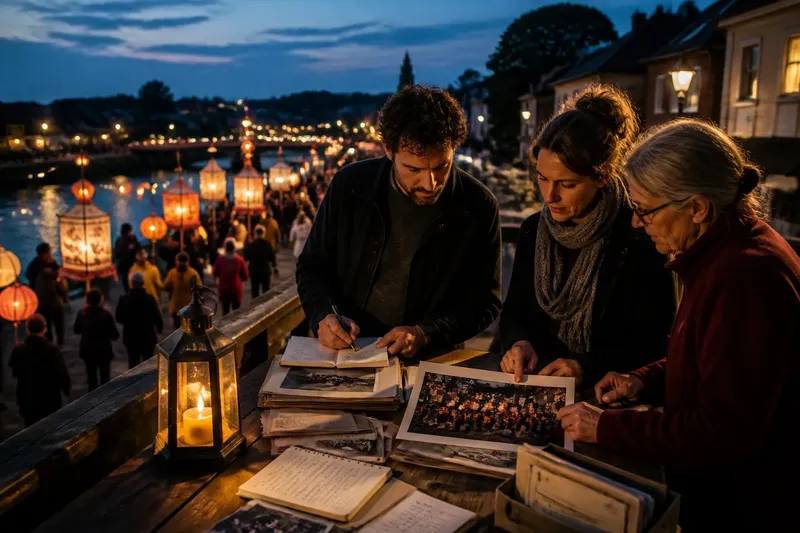
Say you are arranging a neighbourhood lantern walk and people keep gathering around the wrong entrance. You could place a volunteer at the chosen meeting point and have them light a covered lantern when the walk is ready to begin. The visible cue should help arriving guests locate the group and understand the transition, without requiring anyone to treat the lantern as sacred or share a particular interpretation.
When the ritual is hard to join
A recurring action may be familiar to regulars but opaque to newcomers. A call-and-response, a line of movement or a shared toast can leave visitors unsure when to speak, where to stand or whether silence is acceptable. The cause is often not the gesture itself, but an unspoken instruction known only to the people who designed it.
Make the invitation visible and brief. A small sign, a spoken cue from the host or a volunteer who demonstrates the action can remove guesswork. Offer an alternative that preserves dignity: people might join in, observe, or take part in a quieter way. The ritual should create a point of connection, not a test of belonging.
Check the physical setting as well. A narrow entrance can make a circle difficult to form, while loud music can swallow a spoken cue. Choose a place where the action can be seen and heard, and leave enough room for people to approach or step aside without blocking others.
When a familiar sequence becomes a performance
Repetition can make a small action feel staged if it is polished for an audience rather than shaped with the people present. This may happen when a host explains every movement, asks guests to reproduce a particular expression, or treats participation as proof of enthusiasm.
Keep the cue simple and let the response remain ordinary. A welcome can be a nod, a shared phrase or a moment to set down a coat; it need not produce a dramatic display. If the gathering includes children, older guests or people who do not know one another, avoid making one form of response the standard everyone must copy.
Notice whose comfort the sequence serves. If the action makes the organiser’s job easier but adds awkwardness for guests, adjust it. A host can signal the next moment without requiring everyone to stand, speak or touch an object. Where a custom has a specific community or religious meaning, ask people with relevant knowledge before adapting it.
When the rhythm keeps breaking
A ritual loses its usefulness if its timing is unpredictable. Guests may miss the opening because the cue is hidden among announcements, or a closing gesture may arrive while people are still eating and talking. Often the sequence has too many parts, or no one has responsibility for signalling the transition.
Choose a small number of moments that matter: arrival, a shared centre point and departure are enough for many gatherings. Give each one a recognisable cue, such as a change in music, a hand-held bell or a host moving to a clearly visible place. Keep the cue consistent, but allow a little flexibility if the group is still arriving or finishing a conversation.
Assign the signal to a named role rather than assuming someone will notice. That person might be the host, a stage manager or a volunteer at the gathering point. They do not need to control every minute; they simply help people see when one part has ended and another can begin.
When the same gesture means different things
A gesture can carry distinct associations across families, communities and faiths. A circle, a shared drink or a moment of silence may feel welcoming to some and uncomfortable to others. The problem is not that interpretations differ; it is the assumption that a familiar action means one thing to everybody.
Describe what people are being invited to do without assigning a single meaning to it. You might say, “We’ll pause together before the meal; join in quietly or take a moment in your own way.” That phrasing explains the immediate action while leaving room for different beliefs, memories and levels of involvement.
When a gesture belongs to a living tradition, do not treat it as decoration. Ask whether it is appropriate to use, who should lead it and how participants should be introduced to it. If those questions cannot be answered with care, choose a locally created action instead.
How can you tell whether a ritual is working?
Do guests need the gesture explained?
Some explanation is normal, especially when a gathering is new. If people repeatedly ask where to go or what to do, make the cue clearer rather than adding a longer speech.
Should everyone take part?
No. A shared moment can include people who watch quietly or choose another form of participation. Make the invitation clear and avoid singling out anyone who declines.
How many repeated actions are enough?
Use only the actions that give the event a recognisable shape. If guests must remember a sequence of several gestures, simplify it until the central cue is easy to notice.
Can a ritual change from one gathering to the next?
Yes, provided people can still recognise its purpose. Keep the basic cue familiar, then adapt the wording, location or level of participation to suit the group.
When a ritual has outlasted its purpose
A gesture can remain on the programme after the reason for it has disappeared. Regulars may keep doing it from habit, while newcomers experience it as an unexplained delay. Rather than defend the sequence because it is familiar, ask whether it still helps people arrive, connect or move between parts of the gathering.
If it no longer serves a clear purpose, retire it gently. Tell regulars what will change and preserve any part they value, such as a shared closing phrase or a moment for informal conversation. A ritual is not made more meaningful by insisting that it stay fixed.
For organisers refining repeated gestures, the most useful measure is how the room responds: whether people can find their place, recognise a transition and participate without pressure. Keep the actions that make those things easier, and let the rest remain optional—or fall away.